

Is Jesus going to reign for 1,000 years or not?
Authored by Robin Schumacher for the Christian Post
A few weeks ago, I wrote an article on the rapture of the Church, defending the idea that the rapture is a real thing in Scripture and that its purpose is to divinely rescue the people of God from the Lord’s coming wrath, which will be rained down in the future tribulational period spoken of by Christ (e.g., Matt. 24) and many biblical authors.
Some of you said that you didn’t think the rapture was going to be an actual event and commented that I was way off base. If you’re one of them, you’re really not going to like the topic this week.
The Bible describes another future period of time that occurs right after the second coming of Christ, which theologians have labeled the “millennium” after a section in Revelation that says:
4 Then I saw thrones, and they sat on them, and judgment was given to them. And I saw the souls of those who had been beheaded because of their testimony of Jesus and because of the word of God, and those who had not worshiped the beast or his image, and had not received the mark on their foreheads and on their hands; and they came to life and reigned with Christ for a thousand years. 5 The rest of the dead did not come to life until the thousand years were completed. This is the first resurrection. 6 Blessed and holy is the one who has a part in the first resurrection; over these the second death has no power, but they will be priests of God and of Christ, and will reign with Him for a thousand years. (Rev. 20:4-6)
Those who think the rapture is balderdash usually poo-poo the idea of a literal 1,000-year reign of Christ on earth. For example, apologist William Lane Craig (whom I deeply respect) disavows the idea of a rapture and says this about a millennium: “The purpose of the passage about the millennium is to reassure and strengthen believers who endure persecution for their faith. We need not know exactly what Christ’s millennial reign is intended to symbolize in order to be reasonably confident that it is not a literal reality.”
So, is the millennium merely a symbol, or is it a future reality?
I believe it is real. And the reason not only has to do with Revelation 20, but with two themes that run throughout the entire Bible: God’s promises to Israel and purpose for His Son.
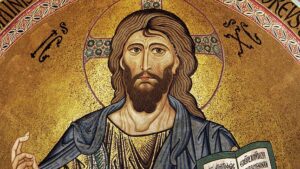
The key to Bible prophecy and the millennium
First, let’s get on the same page with the top three millennium positions.
Postmillennialism is the most niche (and I believe invalid) stance, believing that a utopian state on earth will be brought about through the efforts of the Church, and once accomplished, Christ returns to rule and eternity begins. I doubt I need to tell you we are nowhere near any Christian paradise on earth; in fact, it’s just the opposite, as journalist Chris Hedges notes: “We now live in a nation where doctors destroy health, lawyers destroy justice, universities destroy knowledge, governments destroy freedom, the press destroys information, religion destroys morals, and our banks destroy the economy.”
Next up is the amillennial view, which literally means “no millennium,” although its proponents say that’s not a good description for the position. They prefer “realized millennialism” and say it’s being spiritually fulfilled right now, with Jesus returning one day to finalize it all.
The last is the premillennial view and says Jesus returns before (pre) the millennium and thus it is a future, earthly reality. It’s the position I believe best fits the biblical evidence.
At the root of the premillennial stance is the belief that the covenant God made with Abraham (see Genesis 12 and 15) regarding the literal promises to his descendants was an unconditional one, whose entire set of obligations falls upon God alone. If the covenant was conditional, then one can argue that Israel forfeited those promises, and they now find their fulfillment exclusively in the Church. But if the covenant was unconditional (and I believe Scripture demonstrates that it is), then God remains committed to fulfilling every promise He made.
That conclusion carries enormous prophetic implications.
Many Old Testament passages anticipate the future blessing of Israel and her possession of the land as promised to Abraham. For example, Ezekiel envisions a future day when Israel is restored to the land (Ezek. 20:33–37, 40–42; 36:1–37:28). Within this action, Israel as a nation will be converted, forgiven, and restored as stated in Romans 11:25–27. A remnant of Israel will also repent and receive the forgiveness of God in the future (Zech. 12:10–14).
These prophecies have never been completely fulfilled.
And so, that’s one reason why Israel remains the key to understanding biblical prophecy. If God’s promises to Abraham were unconditional, then a future kingdom must exist in which those promises are realized exactly as God declared. Dr. Renald Showers sums this up as follows:
“If the Abrahamic Covenant is unconditional in nature … then every promise of that covenant must be fulfilled — including the promises that Israel would be given forever the land described in Genesis15:18, and that the Abrahamic Covenant would be an everlasting covenant for Israel. This would mean that Israel would last forever as a people and that God has a future for that nation and its land. It would also mean that the biblical prophecies concerning the future of Israel and its land are to be interpreted literally and that the Premillennial view of those prophecies is correct.”
But there’s another important reason I believe in a literal millennium. It has to do with Jesus Himself.
Think about how His first coming ended.
The creator entered His creation. Israel’s Messiah came to His own people. The rightful King presented Himself to the world. And He was rejected. John tells us, “He came to His own, and those who were His own did not receive Him” (John 1:11).
The world responded to its King by mocking Him, condemning Him, and ultimately crucifying Him. Yet Scripture repeatedly promises that this is not the final chapter of Christ’s earthly relationship with humanity.
The same Jesus who was rejected will return. The same Jesus who wore a crown of thorns will wear many crowns. The same Jesus who stood before earthly judges will sit as Judge over all the earth. The same Jesus who was humiliated before men will be openly exalted before all nations.
These things underscore why the millennium matters.
There must be a visible, recognized, and sustained reign of Christ on the very earth that rejected Him. The King who was denied His rightful place at His first coming will receive it at His second.
The millennial kingdom is not merely about fulfilling promises made to Israel, though it certainly includes that. It is also about the public vindication of the Son of God. Scripture teaches that Christ will reign in glory, subdue every enemy, and ultimately deliver the Kingdom to the Father in triumph before the eternal state begins (1 Cor. 15:24–28).
A literal kingdom provides the stage upon which that triumph is displayed.
You may disagree, and that’s fine.
Reasonable Christians can diverge on these issues, and humility is always appropriate when discussing prophecy. But if Scripture means what it plainly says, then the millennium is far more than a symbolic picture of spiritual truths.
It is the fulfillment of God’s covenant promises. It is the restoration of Israel. It is the public enthronement of Jesus Christ as King.
And it is a reminder that God keeps every promise He makes.
Abraham, amillennial, Christian Post, literal kingdom, Millennium, post millennial, premillennial, Rev. 20